
What Does Hanover’s Town Arborist Do?
On Wed., June 4th, Sustainable Hanover held a Zoom presentation featuring Hanover’s Town Arborist, Asa Metcalf, who talked about his many duties as Hanover’s town arborist since 2013.
Asa is working on a long-term project to inventory all of Hanover’s trees. Though he began by manually recording tree details such as trunk diameter, height, and overall health, he now uses a computer software program to document each tree and record past and current treatments. To date, Asa has inventoried about 800 trees. Elm, oak, ash and maple make up the majority.
Diseases impacting Hanover’s trees include Emerald Ash Borer, and Asa treats roughly 24 trees each year for this disease. Hanover started treatment for Emerald Ash Borer before it was a widespread problem and Hanover has fared better than some other communities because of this. Asa is also on the lookout for Beech Leaf disease and Sudden Oak Wilt and also monitors for pests such as Elm Sawtooth Fly and the Spotted Lantern Fly.
Asa is experimenting with more native tree species, as well as with trees traditionally intended for warmer zones, due to climate change. He plants about 10-15 new trees each year, most of which are replacements.
Responsibility for Hanover’s parks and cemeteries falls to Asa, as well. Pine Knolls Cemetery began as an arboretum and contains many specimen trees, some of which have identifying information attached. A beautiful place to walk, Pine Knolls is one of Asa’s favorite places in New Hampshire. He has an Arbor Day walk in Pine Knolls Cemetery annually.
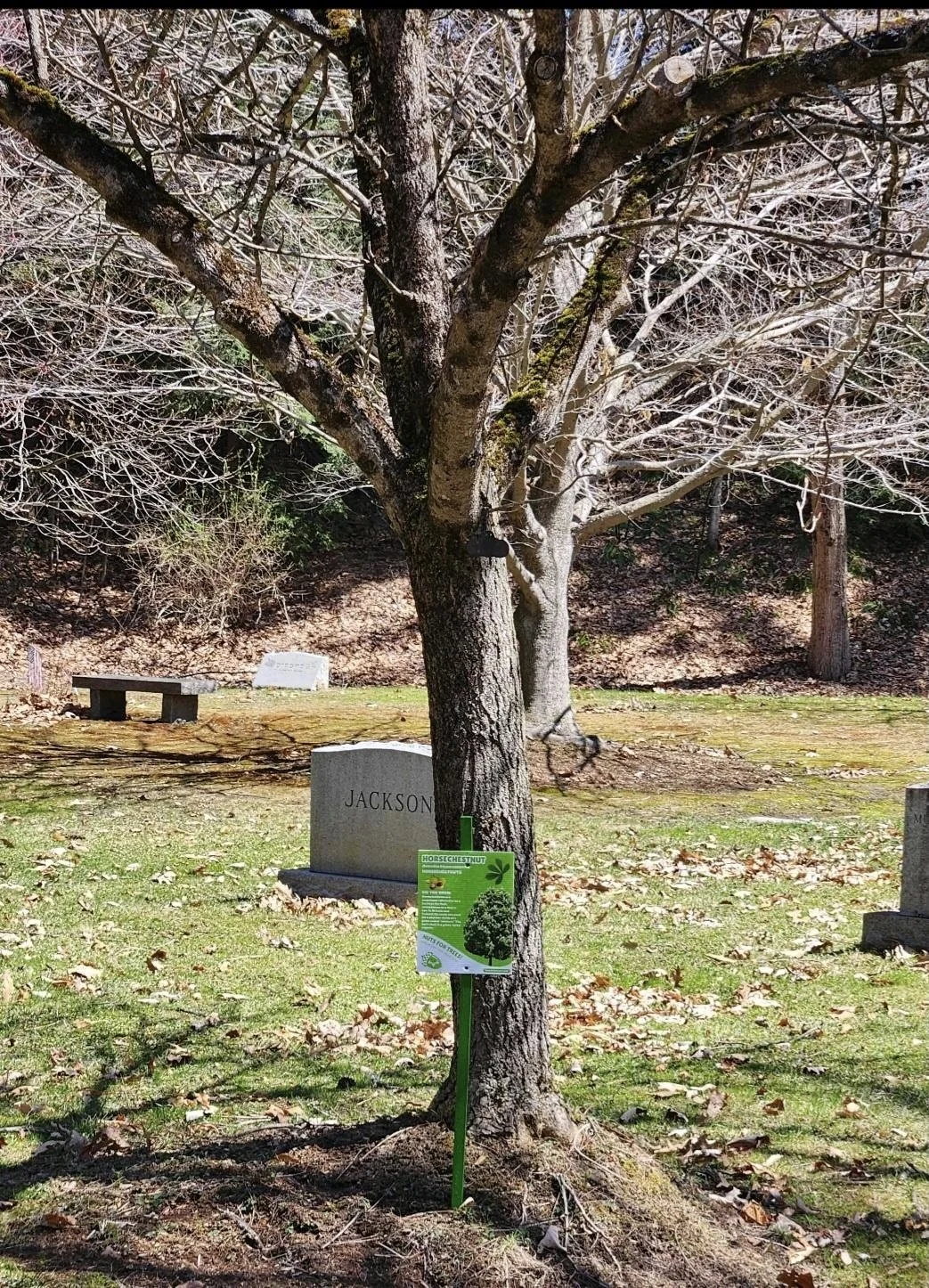
In addition to being a Tree City USA, Hanover has some state championship trees such as a Burr Oak in Pine Park. One attendee of the Zoom presentation discovered that a tree across the street from her house is a state championship Hackberry Tree. Attendees asked Asa questions and shared information, such as the fact that the Dartmouth College website has an interactive map of trees on campus that can be used to do a walking tour.
Finally, Asa told the story of the DeWitt Elm. Until two years ago an enormous tree was on the corner of West Wheelock Street and Main Street on the southwest corner of the Dartmouth Green. Asa estimated it lived it to be 120-130 years old. He reported seeing a photo from 1894 showing the tree, and it survived the 1938 hurricane which destroyed many trees in the Valley. In 2024, the DeWitt Elm underwent a major assessment during which sound waves were shot through the tree, showing decay inside the trunk. The town had spent around $13,000 over the years treating the DeWitt Elm for Dutch Elm Disease. About 2 years ago, Asa got a call during the night asking him to come to campus because one of the Elm’s big branches was in danger of falling onto a light signal even though it was cabled. Shortly thereafter it was determined that the tree was a danger to pedestrians, as well as traffic, and that it had to be removed. The stump remains, and many people miss the majestic DeWitt Elm. Asa was amazed that the tree had lived so long surrounded by concrete. The tree was named after Gordon DeWitt who was a facilities manager at Dartmouth for years and who is remembered by many Hanoverians. At some point, the tree will be replaced.
In closing his presentation, Asa offered these words of advice for tree care:
1. Be vigilant. Watch for things that are amiss with your trees.
2. Get advice from a certified arborist.
Asa’s talk was recorded. It is available on the Sustainable Hanover website. See https://sustainablehanovernh.org/